 /
/
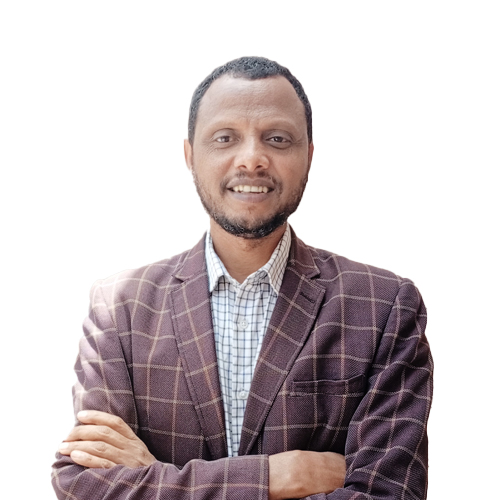
Welcome to the Center for Family Studies (CFS).
Families are one of the most important niche systems and foundational ecosystems of society. They have structures, patterns of communication, rules, expectations, resources, and forms of connectedness. From an intersectional perspective, families are understood as social and interactional spaces shaped by interconnected factors such as gender, urban versus rural settings, sedentary versus pastoral lifestyles, poverty and wealth, literacy levels, disability, ethnicity, clan, culture, migration, displacement, conflict, and other social realities. This shows that families do not function, care, relate, or access opportunities equally, as inequalities in power and resources shape their experiences.
In addition, families should not be understood only through human relationships. Rather, family life is continuously shaped through interactions between human actors (child-father, child-mother, father-mother, child-extended family, etc.) and non-human actors as assemblages, such as family-media-children, family-technology-children-climate, and family-environment-children-work relationships. The wellbeing, opportunities, and challenges of families are therefore rooted in their social positions and lived realities. This understanding encourages us to adopt integrated approaches to family studies, recognizing families as central to understanding the mental health, wellbeing, and empowerment of children, youth, and communities. It also promotes inclusion, social justice, resilience, and culturally grounded approaches through multisectoral frameworks aimed at strengthening families and communities.
The Center for Family Studies was established with the strong belief that strong families are essential for healthy societies and sustainable development. Our Center serves as a platform for dialogue and engagement in areas including research, learning, training, mental health services, psychosocial support, community engagement, and culturally grounded family wellbeing.
CFS is committed to conducting interdisciplinary research on family life, indigenous childcare systems, parenting, child and youth development, mental health, social change, and community wellbeing. We strive to produce knowledge, utilize research evidence to address community needs, and guide policy and practice through evidence-based research. The Center also works to strengthen the capacities of individuals, children, students, youth, practitioners, and institutions. The Center aspires to become a regional hub for innovative, inclusive, and evidence-based approaches to family wellbeing, mental health, resilience, and social development. We welcome collaboration with researchers, practitioners, policymakers, and communities to build stronger families and healthier societies.
Thank you for visiting the Center for Family Studies.
Director, Center for Family Studies (CFS)
Yigzaw Haile, PhD, Associate Professor of Early Childhood Care and Education
Ph.D. in Applied Developmental Psychology with Doctoral Research work on Indigenous Childrearing Practices and ECD Outcomes